

If you’re planning a Tarpon fishing trip to Southwest Florida, one of the first questions you’re probably asking is: When is Tarpon season in Boca Grande?
The short answer is that Boca Grande Tarpon season generally begins in March, builds through April, and reaches peak numbers in May and June. But one of the biggest misconceptions about Tarpon fishing in Southwest Florida is that the season ends when June is over.
It doesn’t.
Tarpon remain throughout Boca Grande, Charlotte Harbor, Pine Island Sound and the surrounding waters well into summer, and August and September can produce some of my favorite fishing of the year. As fall progresses, cold fronts become increasingly important. October can still produce excellent fishing, while November is typically when most of our Tarpon begin migrating south.
During December, January and February, some Tarpon remain in the area, but fishing becomes much more dependent on weather and water temperature.
After more than 25 years as a Boca Grande fishing guide, I’ve learned that there isn’t one date on the calendar when Tarpon season suddenly starts or stops. Weather, tides, water temperature, bait and spawning patterns all influence where the fish are and how they behave.
Here’s how I look at Boca Grande Tarpon fishing month by month.
If you’re ready to plan a trip rather than research the season, you can view our Boca Grande Tarpon Fishing Charters for trip options, rates and booking information.
January & February: Resident Tarpon Between Cold Fronts
January and February are not months when I would tell someone to plan a Southwest Florida trip specifically around Tarpon fishing. There are still a few Tarpon around, but catching them is very dependent on the weather.
The best opportunities usually occur during stretches of warm, calm weather between cold fronts. Unfortunately, those windows can be almost impossible to predict far in advance.
When the weather lines up, Tarpon can sometimes be found around Boca Grande Pass, where live shrimp and crabs can work very well. In the rivers and canals, big live shrimp are another good option, along with smaller live ladyfish or mullet.
Because of the cooler water temperatures, these winter Tarpon generally don’t feed as aggressively as they do during the warmer months.
If Tarpon conditions aren’t favorable, winter is an excellent time to turn your attention to Snook, Redfish and Trout on an Inshore Fishing Charter.
Captain Danny’s Take: If you’re already here and we get several warm, calm days between fronts, there’s always a chance. But January and February aren’t months when I would promise someone dependable Tarpon fishing.
March: The Tarpon Migration Begins
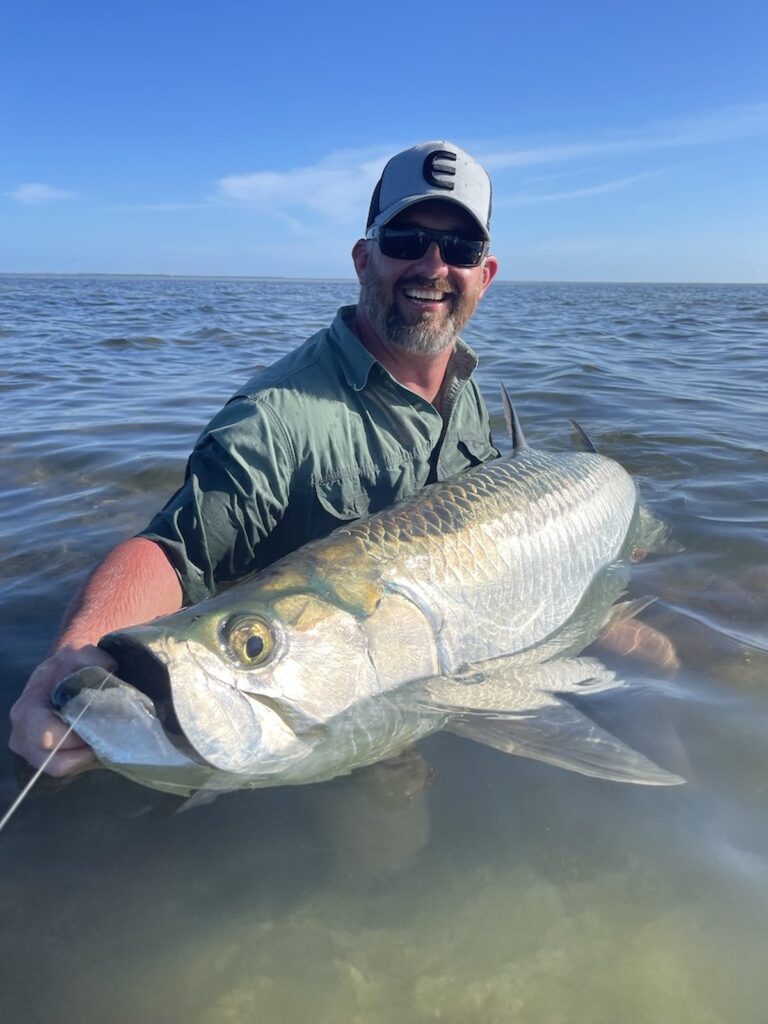
March usually marks the very beginning of the Tarpon migration into Southwest Florida.
Early March can still be weather-dependent, and I prefer targeting Tarpon on the warmer days. As the month progresses, however, the odds improve considerably. By late March, you have a very realistic chance of hooking a big Tarpon.
Fish begin showing up around Pine Island Sound, Boca Grande Pass and lower Charlotte Harbor.
Live shrimp, crabs, pinfish and mullet can all be productive. This is also when artificial lures and fly fishing begin becoming increasingly effective.
March is really a transition month. We’re moving away from those unpredictable winter opportunities and toward the much more consistent fishing that comes with the spring migration.
April: The First Big Push of Tarpon
April is one of my favorite months to target Tarpon in Southwest Florida.
This is usually when we see our first significant wave of migrating fish.
Tarpon can be spread throughout Pine Island Sound, Boca Grande Pass, lower and upper Charlotte Harbor, and depending on the conditions, we’ll begin seeing fish along the beaches as well.
The fish are becoming more numerous, the weather is generally becoming more consistent, and there are several productive ways to target them.
Shrimp, crabs, pinfish, threadfin herring and mullet are all good choices. Artificial lures and fly fishing can also be very effective during April.
For anglers who want excellent Tarpon fishing without necessarily being here during the absolute peak of the May and June crowds, April deserves serious consideration.
May: Peak Boca Grande Tarpon Season Arrives
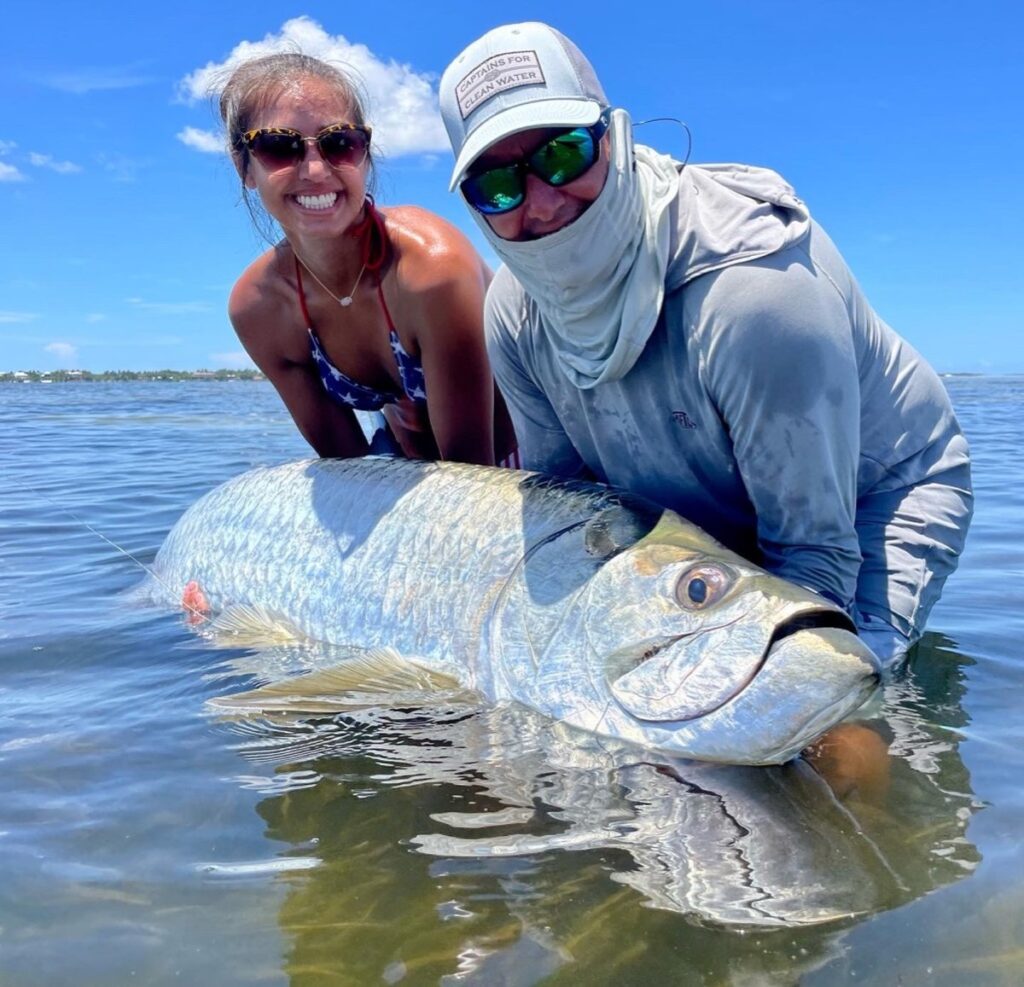
By May, Boca Grande Tarpon season is in full swing, and this is generally when we have the greatest number of Tarpon in the area. By around the third week of May—often near a full or new moon—we can have tremendous numbers of fish throughout the region.
Tarpon can be found throughout Pine Island Sound, Boca Grande Pass, upper and lower Charlotte Harbor and along the Gulf beaches. Every day is different depending on the weather and tides, so being able to adjust and follow the fish is important.
This is also when the famous Boca Grande Hill Tides become a big part of Tarpon season. Strong outgoing tides can create exceptional fishing around Boca Grande, and these limited windows are extremely popular and often book well in advance.
In Boca Grande Pass, huge numbers of Tarpon can be gathered together and heavily involved in spawning behavior. That can actually make them frustrating to catch at times. You may be looking at an incredible number of fish and wondering why you’re not hooked up.
Don’t panic. Keep fishing and keep adjusting. Eventually, you’ll find a hungry one.
Shrimp, crabs, pinfish, squirrelfish, threadfin herring and mullet can all produce. But if you’re planning to fish around Boca Grande Pass, you’d better have some crabs. Artificial lures and fly fishing can also be very effective.
June: Hungry Post-Spawn Tarpon
June is when the beaches and Charlotte Harbor can really get good.
Remember all those Tarpon that arrived during May?
A portion of those fish will move offshore to spawn. When they return, they’re hungry.
There are still plenty of Tarpon in Boca Grande Pass, but those numbers usually begin thinning as June progresses. That doesn’t mean the fish disappeared. They’re simply transitioning into a different pattern.
And in some ways, the fishing can actually get better.
Post-spawn Tarpon often seem more willing to eat because they’re no longer as focused on spawning.
Crabs remain a key bait around Boca Grande Pass, while pinfish and squirrelfish can also be excellent. Along the beaches and throughout Charlotte Harbor, crabs, threadfin herring and pinfish are all productive.
Artificial lures also begin working especially well as we get later into June.
This is an important distinction: fewer Tarpon stacked into Boca Grande Pass does not necessarily mean worse Tarpon fishing. Sometimes it means it’s time to stop looking in one place and start following the fish.
July: Tarpon Season Isn't Over
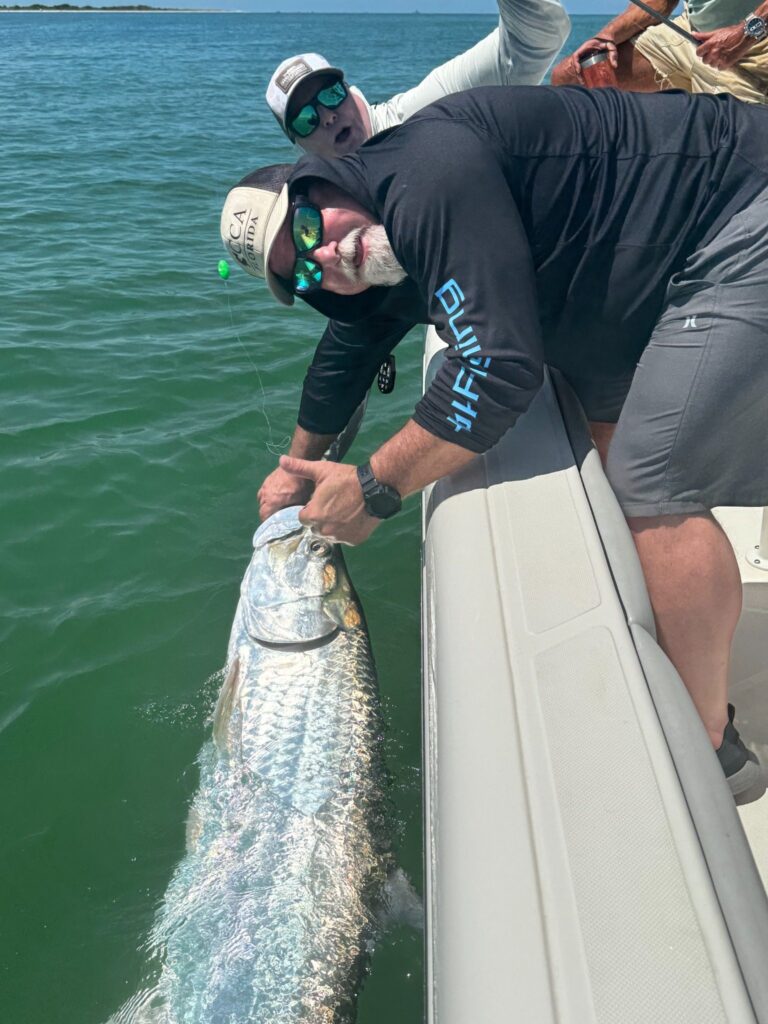
July 1st doesn’t arrive and suddenly all the Tarpon disappear.
I hear some version of that misconception every year.
There are still a lot of Tarpon in Southwest Florida during July. You simply don’t see the massive concentrations that you may have seen during May and June.
The difference?
They’re hungry.
When we find July Tarpon, they tend to bite.
That means you should be prepared to spend more time hunting for fish. The beaches and Charlotte Harbor can both be very good, and Boca Grande Pass will have productive periods as well.
There isn’t necessarily one place or pattern that works every day. You have to go find them.
Crabs remain important around Boca Grande Pass, with pinfish and squirrelfish also producing. On the beaches and in Charlotte Harbor, crabs, threadfin herring and pinfish are excellent choices.
And don’t leave the dock without some artificial lures. Artificial fishing can be extremely effective this time of year.
August: Charlotte Harbor Tarpon Fishing Heats Up
August is hot, so we start early and try to beat the heat.
Boca Grande Pass can still have its moments, but this is the time of year when Charlotte Harbor really shines.
The fish aren’t necessarily going to be sitting in one obvious location. You may have to put in some time finding them, but when you locate them, they tend to be willing to eat.
Live ladyfish, pinfish and threadfin herring are all top bait choices. I also wouldn’t go Tarpon fishing in August without a good assortment of artificial lures.
August is also one of my favorite times of year to target juvenile Tarpon on fly.
There are fewer boats than during peak season, and the fishing becomes more about reading the water, locating bait and finding actively feeding fish.
September: One of Southwest Florida's Overlooked Tarpon Months
September fishes very similarly to August.
It’s still hot, so early starts make sense, and the Tarpon fishing can be very good.
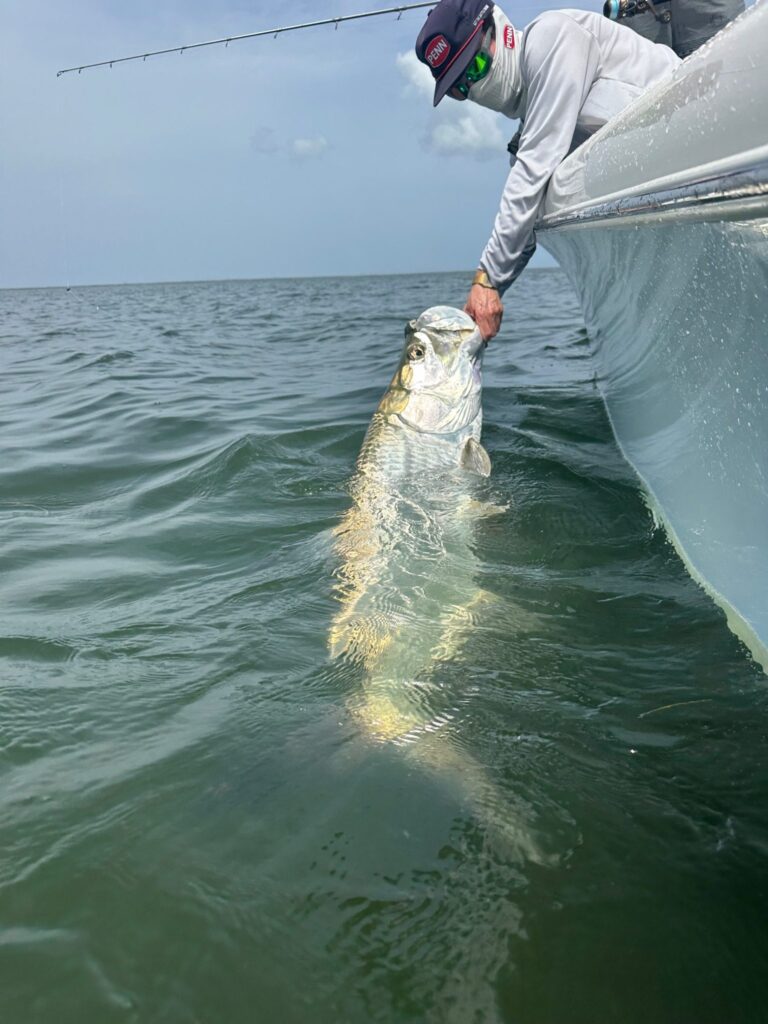
One of the coolest feeding behaviors we begin seeing in August and often see even more during September involves ladyfish.
Tarpon will follow schools of ladyfish and wait for them to begin feeding. Once the ladyfish are distracted and feeding aggressively, the Tarpon move in and begin feeding too.
It’s one of the coolest things to watch in Charlotte Harbor—and when you find it happening, the fishing can be outstanding.
September is one of the reasons I tell anglers not to assume Tarpon fishing ends with the traditional peak season. There may be fewer boats and fewer giant schools of Tarpon, but there are still plenty of fish to catch.
September is also part of a much bigger fall fishery in Southwest Florida. For a look at Tarpon along with Redfish, Snook, Trout and nearshore opportunities, see our Fall Fishing Guide.
October: Cold Fronts Start Calling the Shots
October can be really good, but now cold fronts begin becoming an important part of the equation.
As the first fronts arrive and water temperatures begin cooling, Tarpon start schooling together again.
By the second or third front, we often begin seeing fish gathering in lower Charlotte Harbor and around Boca Grande Pass as they prepare for their migration south.
If you’re here when those fish start getting ready to move, hang on. The action can be excellent.
Live ladyfish and pinfish are productive, and artificial lures can work very well.
The important thing to understand about October is that the calendar doesn’t determine the fishing—the weather does. A warm October can fish differently from a year when stronger cold fronts arrive early.
Because Tarpon movements change with weather, tides and bait throughout the season, check our Southwest Florida Fishing Reports for recent conditions and what’s happening on the water.
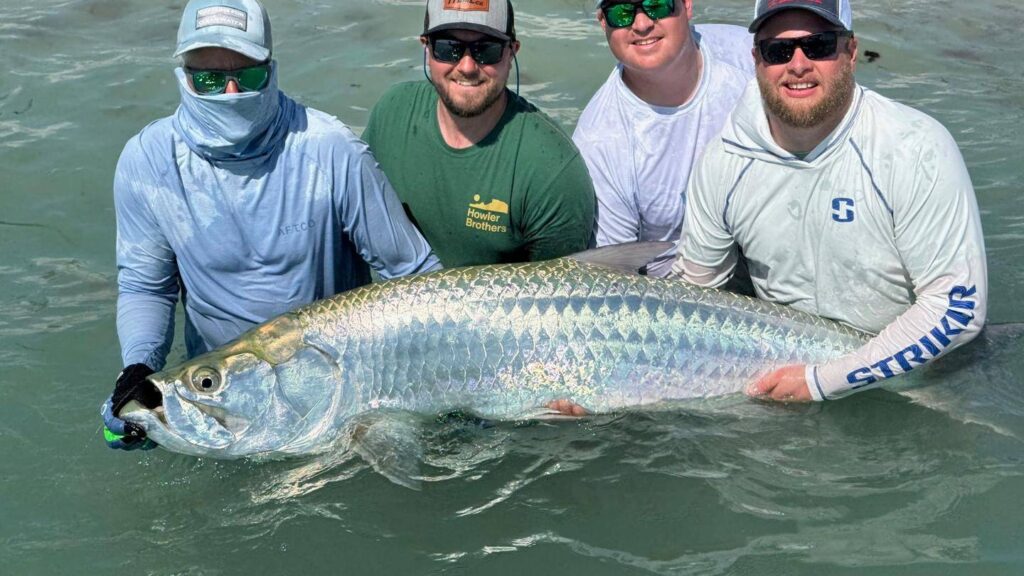
November: Tarpon Begin Migrating South
November is generally when most of our Tarpon begin heading south for warmer water.
Strong cold fronts usually get that migration moving.
If Southwest Florida experiences a very mild fall, we may still have fish around, but by November I don’t consider Tarpon fishing dependable enough to tell someone to plan a trip specifically around it.
There can certainly be opportunities. They’re simply harder to predict.
For anglers visiting Southwest Florida in November, there are usually plenty of other excellent options, including Redfish, Snook, Trout and nearshore fishing.
December: Tarpon Fishing Becomes Weather-Dependent Again
December brings us back to conditions similar to January and February.
A few Tarpon may remain, particularly during warm stretches between cold fronts, but consistent Tarpon fishing isn’t something I count on during December.
When conditions line up, we’ll certainly take advantage of the opportunity. Otherwise, there are better and more dependable species to target during the winter months.
So, What Is the Best Month for Tarpon Fishing in Boca Grande?
If your goal is to experience peak Boca Grande Tarpon season with the greatest concentrations of migrating fish, May and June are hard to beat.
But the “best” month depends on the experience you’re looking for.
April is one of my personal favorites because the migration is building and fishing can already be excellent.
May and June offer peak numbers and the classic Boca Grande Tarpon experience.
July still has plenty of Tarpon, but you’ll spend more time hunting for them—and the fish you find are often hungry.
August and September are two of the most overlooked months of the year. There are fewer boats, Charlotte Harbor can be excellent, and actively feeding Tarpon can provide outstanding fishing.
October can also be very good, but cold fronts increasingly dictate where the fish are and when they begin preparing to migrate south.
There really isn’t a single date when Boca Grande Tarpon season ends.
The fish change patterns. Good Tarpon anglers change with them.
Where Do Boca Grande Tarpon Go Throughout the Season?
One of the biggest mistakes an angler can make is assuming that because Tarpon aren’t stacked in Boca Grande Pass, they’ve left Southwest Florida.
Throughout the season, fish move between Boca Grande Pass, Pine Island Sound, Charlotte Harbor, the Gulf beaches and surrounding waters based on spawning behavior, bait, tides, weather and water temperature.
That’s why my approach changes throughout the year.
During peak season, we may be fishing around huge concentrations of Tarpon. Later in summer, we may spend more time searching Charlotte Harbor or the beaches for smaller groups of actively feeding fish.
Finding the fish is part of Tarpon fishing.
When Should You Book a Boca Grande Tarpon Charter?
If you’re planning specifically around Tarpon, April through September gives you the broadest window of consistently good opportunities, with May and June providing the traditional peak migration.
October can also be excellent when the weather cooperates.
If you’re limited to a particular month, don’t assume you’ve missed Tarpon season just because you can’t visit during May or June. Some of my favorite days on the water happen after the peak-season crowds have gone home.
For charter information, trip options and current rates, visit our Boca Grande Tarpon Fishing page.
Boca Grande Tarpon Season FAQ
When is Tarpon season in Boca Grande?
The Tarpon migration generally begins in March, builds during April and reaches peak numbers during May and June. Good Tarpon fishing can continue through July, August and September. October can also produce excellent fishing depending on cold fronts, while November usually marks the migration south.
What is the best month for Tarpon fishing in Boca Grande?
May and June generally have the greatest concentrations of migrating Tarpon, but April is one of Captain Danny’s favorite months. July through September can also offer excellent fishing with fewer boats and actively feeding fish.
Are there still Tarpon in Boca Grande in July?
Yes. Tarpon don’t disappear when June ends. There are still plenty of fish in the area during July, although they tend to be more spread out through Charlotte Harbor, the beaches and surrounding waters.
Can you catch Tarpon in Boca Grande in August and September?
Yes. August and September can provide very good Tarpon fishing. Finding fish may require more searching than during peak season, but the Tarpon you locate are often actively feeding.
Are there Tarpon in Boca Grande during the winter?
Some Tarpon remain during December, January and February, but fishing is highly weather-dependent. Warm, calm periods between cold fronts provide the best opportunities, and winter Tarpon generally feed less aggressively in cooler water.
When do Tarpon leave Boca Grande?
There isn’t one exact departure date. Cold fronts increasingly influence Tarpon movement during October, and stronger fronts during November generally trigger most fish to migrate south toward warmer water.
Is Boca Grande Pass the only place to catch Tarpon?
No. Depending on the month and conditions, Tarpon may be found throughout Boca Grande Pass, Pine Island Sound, Charlotte Harbor, along the Gulf beaches and in other surrounding waters. Successful fishing often means following the fish as their seasonal patterns change.
Ready to Experience Boca Grande Tarpon Fishing?
Knowing when to come is only part of the equation. Tides, weather, bait, spawning behavior and recent fish movement determine where we fish on any particular day.
I spend more than 250 days a year on these waters, and when you book a Tarpon trip with ReelFishing Charters, we’ll adjust the plan around what’s actually happening—not what the calendar says should be happening.